If you're involved in tire hauling in California, understanding the Waste Tire Hauler Bond is essential for your business's compliance and credibility. This bond not only ensures you adhere to environmental regulations but also protects against the consequences of illegal dumping. You might be wondering what it takes to secure this bond, the financial implications, and how it impacts your operations. There's more to this requirement than just paperwork, and the implications for your business and the environment are significant. What are the specific steps you need to take to navigate this process effectively?
Overview of Waste Tire Hauler Bond
A waste tire hauler bond is essential for anyone looking to operate as a tire hauler in California. This bond serves as a financial guarantee, ensuring that you'll comply with state laws and regulations regarding waste tire management. By securing this bond, you demonstrate your commitment to responsible practices, which can enhance your reputation in the industry.
Typically, the bond amount varies based on your business's size and the volume of tires you handle. You'll need to work with a surety company to obtain it, as they'll assess your financial stability and business practices before issuing the bond. This process may require you to provide documentation about your operations, so be prepared for that.
Having a waste tire hauler bond protects not only your business but also the environment and public health. It ensures that you'll properly dispose of waste tires and prevent illegal dumping, which can lead to harmful consequences.
Moreover, should any claims arise against you for failure to adhere to regulations, the bond can cover damages, safeguarding your financial interests. In summary, obtaining this bond is a crucial step for tire haulers in California.
Importance of the Bond
Securing a waste tire hauler bond isn't just a regulatory formality; it plays a vital role in your business's success and sustainability. This bond acts as a financial safety net, ensuring that you're held accountable for your operations. If issues arise, such as improper disposal or failure to comply with regulations, the bond provides a mechanism for restitution, protecting your clients and the environment.
Having this bond in place enhances your credibility, making you a more attractive option for potential clients. They'll see you're committed to adhering to industry standards, which can lead to increased business opportunities.
Furthermore, many municipalities require a bond for licensing, so having it can simplify your compliance process and expedite approvals.
Additionally, the bond helps foster trust in your community. By demonstrating your commitment to responsible waste management, you position yourself as a leader in environmental stewardship. This not only benefits your reputation but also contributes to a healthier ecosystem.
Ultimately, investing in a waste tire hauler bond is a strategic decision that benefits your business, clients, and the environment alike.
Eligibility Requirements for Haulers
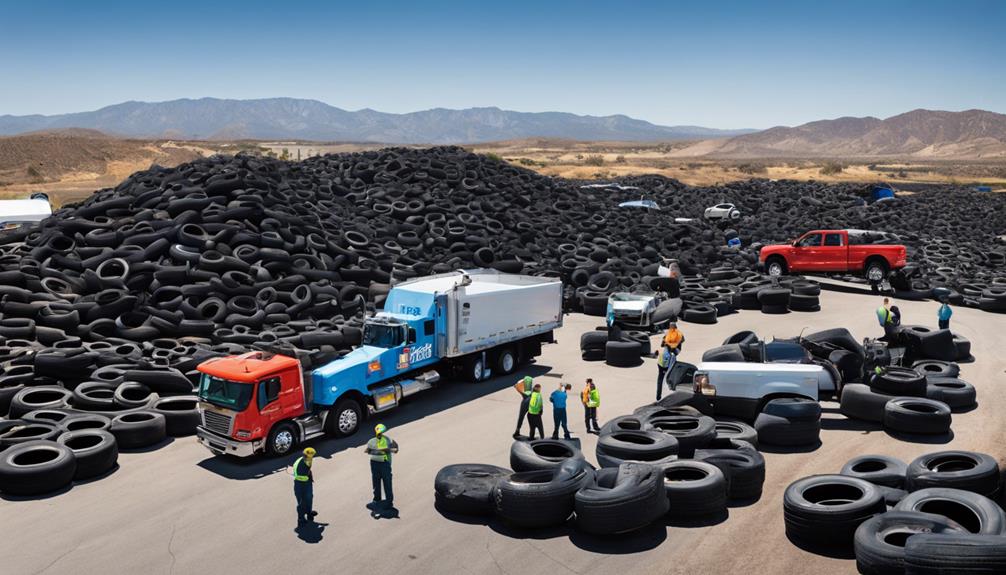
When considering eligibility for a waste tire hauler bond, you must meet specific criteria set by state regulations. First, you need to hold a valid waste tire hauler registration issued by the California Department of Resources Recycling and Recovery (CalRecycle). This registration ensures you're recognized as a legitimate hauler and are compliant with state laws.
Additionally, you must demonstrate financial responsibility, which typically involves securing a bond amount that aligns with your anticipated annual waste tire hauling volume. This bond acts as a safety net, ensuring that you can cover any potential liabilities or damages resulting from your operations.
You'll also need to provide proof of insurance, which protects you and your clients in case of accidents or environmental damage during hauling.
Your business should be in good standing, meaning you haven't had any major violations or penalties related to waste tire management.
Lastly, be prepared to submit any required documentation, including your business license and tax identification number. Meeting these eligibility requirements is crucial for obtaining your waste tire hauler bond and ensuring you're legally prepared to operate in California's waste tire industry.
Application Process for the Bond
To successfully navigate the application process for a waste tire hauler bond, start by gathering all necessary documentation.
You'll need to provide proof of your business registration, a valid driver's license, and any relevant permits or licenses specific to waste tire hauling. Next, prepare your financial statements, as they demonstrate your ability to meet the bond requirements.
Once you have all your documents ready, reach out to a surety company that specializes in waste tire hauler bonds.
They'll guide you through their specific application process. Be prepared to fill out an application form and possibly undergo a credit check. This step assesses your financial stability and helps determine your bond premium.
After submitting your application, the surety company will review your information.
If everything checks out, they'll issue your bond. Make sure to ask about the timeline for approval, as it can vary.
Finally, once you receive your bond, keep it on file, as you'll need to present it to the California Department of Resources Recycling and Recovery when required.
Following these steps will help streamline your application process and get you on the road to compliance.
Bond Amount and Duration
The bond amount required for waste tire haulers in California typically reflects the scale of your operations and the regulatory risks involved.
Generally, you'll find that the bond amounts range from $15,000 to $100,000, depending on your business size and history. If you're just starting out, you might lean towards the lower end of that spectrum, but as your business grows or if you have a record of compliance issues, you may need to increase your bond amount.
The duration of the bond is another crucial aspect. Typically, the bond is valid for one year, and you'll need to renew it annually.
This means you should plan for the cost of renewal in your budget. Be aware that your bond amount might change during renewals based on your business performance and compliance history.
It's essential to keep your records in order and demonstrate your commitment to following regulations, as this can influence your bond amount in the future.
Compliance and Enforcement
In California, maintaining compliance with waste tire hauling regulations is critical for your business's success and longevity. You need to understand that failing to adhere to these rules can lead to severe penalties, including fines and potential loss of your operating license.
Regularly review the regulations set forth by the Department of Resources Recycling and Recovery (CalRecycle) to ensure you're always up to date.
Enforcement actions can occur if you're found violating any of the waste tire hauling laws. This includes improper documentation, failure to obtain the necessary permits, or not maintaining the required bond.
It's essential to keep accurate records of all tire transactions, including the origin and destination of the tires you haul. This documentation not only protects you but also helps demonstrate your compliance during inspections.
Be prepared for compliance inspections, which can happen at any time. Having all your paperwork in order and ensuring your operations meet state standards will help you navigate these inspections smoothly.
Impact on the Environment
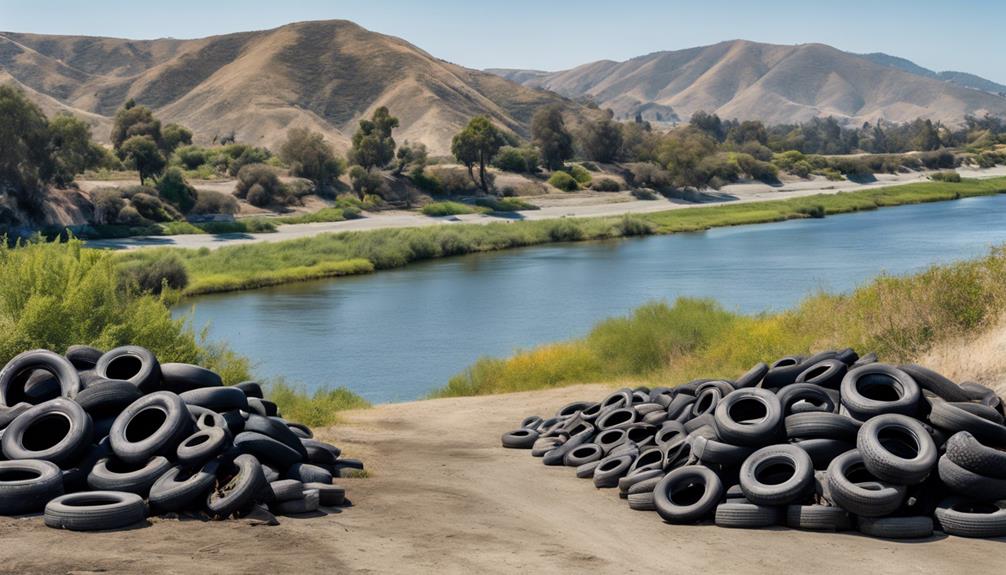
Compliance with waste tire hauling regulations not only protects your business but also plays a significant role in environmental conservation. When you adhere to these regulations, you help prevent the illegal dumping of tires, which can lead to serious environmental hazards.
Tires left in landfills or abandoned sites can release toxic substances into the soil and waterways, harming wildlife and disrupting ecosystems. Proper disposal and recycling of waste tires mitigate these risks. By transporting tires to authorized facilities, you're ensuring they're processed correctly, which reduces the likelihood of pollution.
Tires can be repurposed into various products, such as asphalt, playground surfaces, or even rubber mulch, providing a sustainable solution that benefits both the environment and the economy.
Moreover, your commitment to compliance fosters a culture of responsibility within the community. When you set a positive example, others are more likely to follow suit, amplifying your impact on environmental protection.
Conclusion
In conclusion, obtaining the California Waste Tire Hauler Bond is essential for your tire hauling business. It not only ensures compliance with environmental regulations but also boosts your credibility in the community. By adhering to eligibility requirements and completing the application process, you can secure the bond and contribute to responsible waste management practices. Ultimately, this bond helps protect public health and the environment, making it a crucial step in your operations.