When you tackle excavation projects in Los Angeles, understanding lateral support is crucial. It's not just about digging; it's about ensuring safety and stability for both your site and surrounding structures. Compliance with local regulations is a must, and you'll need the right permits from the Department of Building and Safety. As you consider the techniques and challenges involved, you might find that the complexities of urban excavation can be quite revealing.
Understanding Lateral Support in Excavation
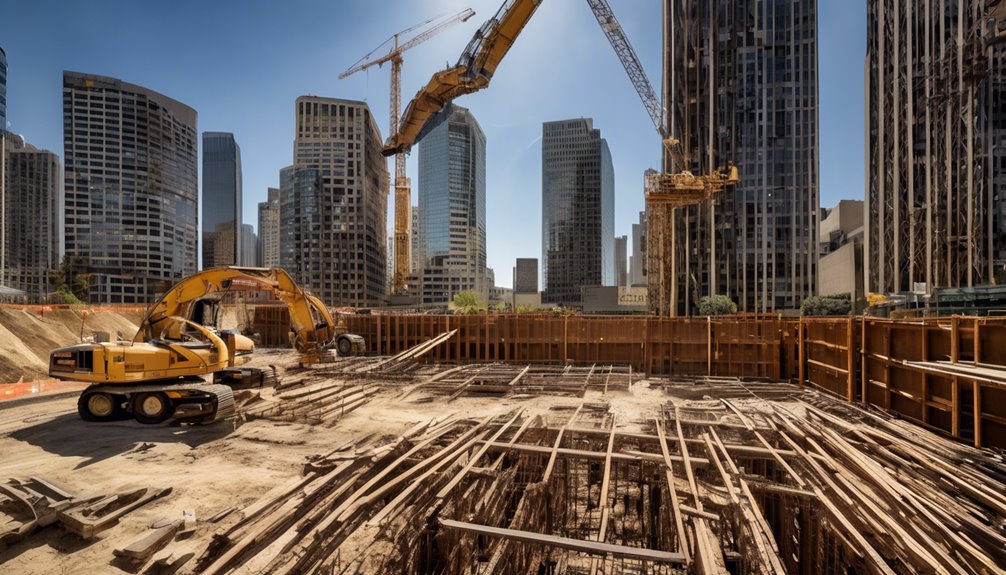
When you're digging in Los Angeles, understanding lateral support is crucial to ensure the stability of your excavation site.
Lateral support refers to the resistance against soil movement caused by excavation. Without proper support, you risk soil collapse, which can endanger workers and damage nearby structures.
To achieve effective lateral support, you need to assess the existing soil conditions and surrounding structures. Techniques like shoring, underpinning, or using retaining walls can provide the necessary support.
It's also important to monitor any changes in soil moisture or weather conditions that could affect stability.
By prioritizing lateral support, you'll create a safer work environment and minimize potential liabilities.
Always consult with a structural engineer to determine the best approach for your specific excavation project.
Regulatory Framework for Excavation in Los Angeles
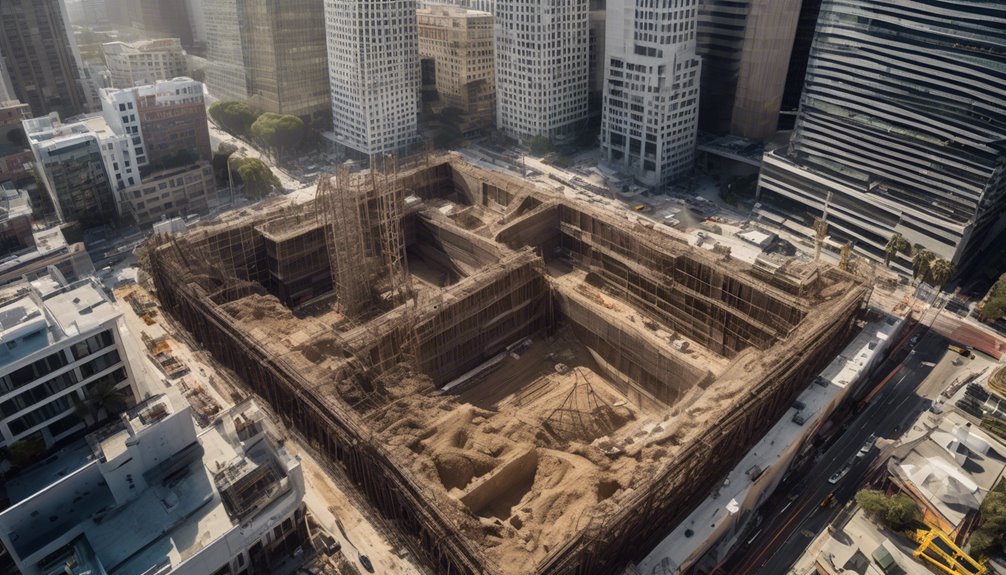
Ensuring proper lateral support during excavation is just one part of a larger picture that includes navigating the regulatory framework in Los Angeles.
You'll need to familiarize yourself with various local ordinances and state regulations governing excavation activities. The Department of Building and Safety (DBS) plays a crucial role in this process, issuing permits and ensuring compliance with safety standards.
It's vital to submit detailed plans that showcase how you'll maintain lateral support and protect adjacent properties. Additionally, you might encounter requirements related to environmental assessments and soil testing.
Techniques for Providing Lateral Support
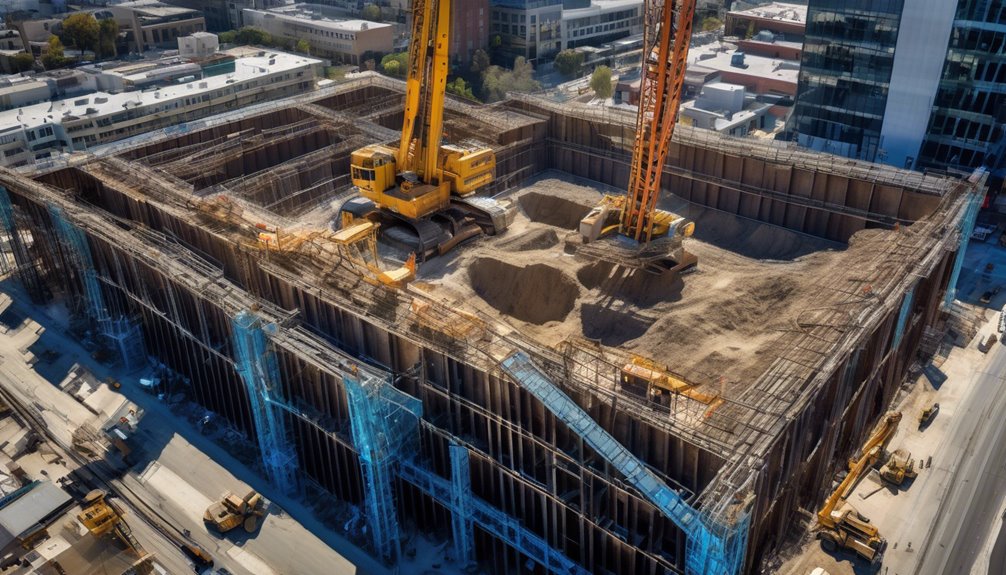
Several effective techniques can provide lateral support during excavation, ensuring the stability of adjacent structures and reducing the risk of soil movement.
One common method is using sheet piles, which you drive into the ground to create a barrier against soil pressure.
Another option is to employ bracing systems, such as cross-bracing or struts, to reinforce excavated walls.
You might also consider using soil nails, which involve inserting long steel rods into the ground to stabilize slopes.
Additionally, installing tiebacks can anchor walls to more stable soil layers, enhancing support.
Finally, using retaining walls can help control lateral forces effectively.
Common Challenges in Excavation Projects
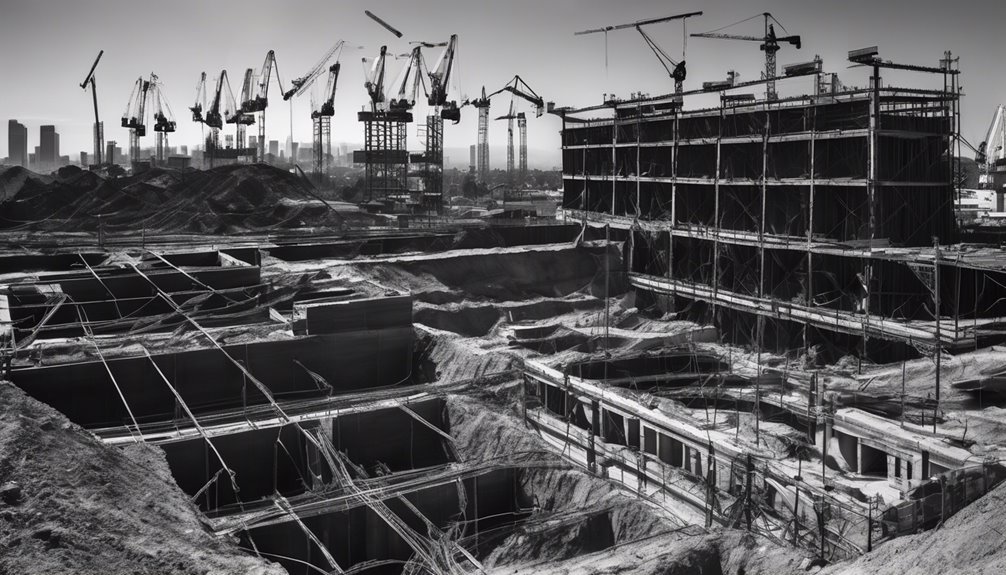
Excavation projects often come with a variety of challenges that can complicate the process and impact timelines.
You'll likely encounter several issues that require careful planning and quick thinking. Here are some common challenges you should be aware of:
- Soil Conditions: Unforeseen soil types can affect the excavation depth and stability.
- Utility Conflicts: Hidden underground utilities may disrupt your plans and cause delays.
- Weather Impacts: Rain or extreme temperatures can halt work and create unsafe conditions.
- Regulatory Compliance: Navigating permits and local regulations can slow down your project significantly.
Being prepared for these challenges can help you keep your excavation project on track and ensure a smoother process overall.
Case Studies of Lateral Support in Urban Development
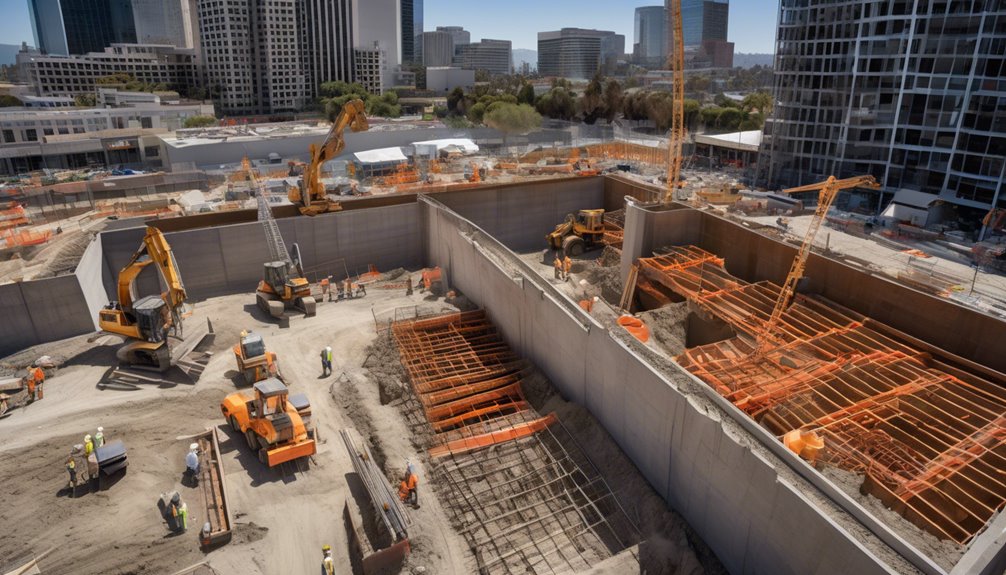
While urban development projects often demand innovative solutions, effective lateral support plays a crucial role in maintaining stability during excavation.
You might consider the Los Angeles County Museum of Art expansion, where engineers used soil nails and shotcrete to provide robust lateral support. This prevented soil movement that could jeopardize nearby structures.
Another example is the Wilshire Grand Center, which implemented a deep foundation system, offering exceptional lateral resistance during construction.
These cases illustrate how tailored lateral support solutions can mitigate risks and enhance project safety. By learning from these examples, you can better understand the importance of lateral support in your own urban development projects, ensuring stability and structural integrity throughout the excavation process.
Frequently Asked Questions
What Are the Costs Associated With Lateral Support Systems?
When considering lateral support systems, you'll encounter costs for materials, labor, design, and potential permits. It's essential to budget for unexpected expenses, as site conditions can significantly influence the overall financial requirements of your project.
How Long Does a Typical Lateral Support Installation Take?
A typical lateral support installation usually takes between a few days to several weeks, depending on the project's complexity and site conditions. You'll need to factor in permitting and coordination with other construction activities, too.
Who Is Responsible for Monitoring Lateral Support Effectiveness?
You're responsible for monitoring lateral support effectiveness. Regular inspections and assessments help ensure it functions properly. Collaborate with engineers and contractors to address any issues promptly, maintaining safety and stability throughout the excavation process.
Can Lateral Support Methods Vary by Soil Type?
Yes, lateral support methods can definitely vary by soil type. You need to assess the soil characteristics, like cohesion and compaction, to choose the most effective support system for your specific excavation project.
What Permits Are Required for Lateral Support Installation?
You'll need specific permits for lateral support installation, including excavation permits and possibly environmental assessments. It's vital to check local regulations, as requirements can vary based on your project's scope and location. Always consult local authorities.
Conclusion
In conclusion, navigating excavation projects in Los Angeles requires a solid understanding of lateral support and compliance with local regulations. By employing effective techniques and anticipating common challenges, you can ensure the safety and stability of your project. Always prioritize thorough soil assessments and environmental evaluations to tackle unforeseen issues. With careful planning and execution, you can successfully manage excavation work, protecting not only your project but also the surrounding structures and communities.